- Blog
- News & Updates
- The real cost of a flight disruption in 2026
The real cost of a flight disruption in 2026


A flight delay or cancellation doesn’t just waste your time, it often hits your wallet, too.
To understand how much flight disruptions really cost passengers, we surveyed 1,996 people in the EU, UK, USA, and Brazil who'd experienced a significant disruption (delays, cancellations, missed connections, schedule changes, and lost or damaged luggage). The result is very clear: disruptions don't just ruin plans — they're expensive.
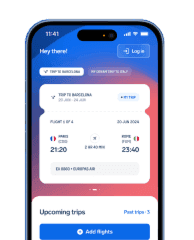
In this article, we break down what travelers actually pay, which disruptions cost the most, and how to protect yourself — starting with the free tool already doing exactly that for over 1 million travelers: the AirHelp app.
Key takeaways from our survey
The average cost of a disruption is €514 😮
73% of passengers said they were financially worse off because of their disruption.
68% said the experience caused major stress and frustration.
40% weren’t satisfied with the care airlines provided during the disruption.
Only 25% said their airline informed them about their passenger rights while things were going wrong.
And one of the most important patterns: the biggest costs aren’t always the ones you expect.

It’s not just the “extra spend” — it’s money you can’t get back
When a flight disruption occurs, most people think about the obvious costs like airport food, taxis, maybe a hotel.
But our survey suggests the bigger financial damage often comes from money already spent that you can’t recover — like prepaid accommodation or activities you miss.
Across the dataset:
57% of passengers had to spend extra out of pocket during a disruption.
Another 20% lost money that couldn't be recovered, a non-refundable hotel stay, for instance.
While 5% lost income they'd expected to earn, just over a quarter, 27%, said the disruption cost them nothing.
This is exactly the gap AirHelp+ is built to close. Its flight disruption, missed connection, and luggage insurance pay fixed amounts (€100, €200, and €100 respectively) regardless of whose fault the disruption was — money that lands while an airline is still deciding whether it owes you anything at all, managed entirely from the AirHelp app.
The emotional cost is real and passengers feel unsupported
Money matters. But it's not the whole story. When we asked passengers about the experience itself:
43% said “being stressed” was a major problem — the second-highest of any issue measured.
“Losing money” was also a huge issue (27% rated it a major problem, whilst 37% rated it a medium problem).
29% reported negative health or well-being effects due to the disruption, like fatigue, missed sleep or illness.
And that lack of support shows up clearly elsewhere in the results: 40% weren't satisfied with the care airlines provided, and only 25% said the airline told them about their rights during the disruption.
When people don't know what they're entitled to, it's easier to feel stuck and for costs to pile up.
Air passenger rights exist for a reason, but many travelers are left in the dark
Disruptions create major stress and a real financial burden. That’s exactly why passenger-rights rules exist.
In Europe, EC 261 (and UK 261 in the UK) is designed to make sure passengers are properly cared for during serious delays and cancellations — and, in many cases, financially compensated when the airline is responsible. Compensation can be up to US$650, depending on the flight distance and how late you arrive.
That law just had its biggest update in more than 20 years. On 7 July 2026, the European Parliament formally approved a reform of EC 261. The core protections held — the 3-hour delay threshold and the US$650 compensation bands are unchanged — and passengers gained a few new ones: a guaranteed free personal item, faster rerouting on any carrier when a flight is cancelled, and a clear 9-month window to file a claim. None of it changes what you're owed for a disruption today; airlines have 12 months to adapt, so the practical changes land around late 2027. Read the full breakdown of what's changing.
But even when protections exist, passengers don't always get what they're entitled to — often because they're not told. In our survey, only 25% of travelers said their airline informed them of their rights during the disruption, and globally 35% said they weren't aware of passenger rights rules when flying in Europe. That figure rises to 40% in the USA and 50% in Brazil — even though Brazilian air passengers are protected by a dedicated law, ANAC 400.
When people don’t know what they can ask for or that they may be owed compensation, they’re far more likely to pay out of pocket and “just deal with it,” even though they shouldn’t have to.
What you can do next time your flight is disrupted 💡
You can’t stop a disruption from happening. But you can reduce the damage.
1) Know before it happens
Add your flights to the AirHelp app and it tracks them in real time, flags the moment a disruption might owe you money, and keeps your AirHelp+ insurance benefits (if you have them) ready to pay out automatically.
2) Keep every receipt (even small ones)
Food, taxis, toiletries, replacement transport — if you paid because your trip went wrong, document it.
3) Ask the airline (in writing) what they’ll cover
Airlines often have obligations to provide care during long delays and cancellations, but passengers aren’t always told. Our survey suggests this is a major gap.
4) Check if you’re owed flight compensation
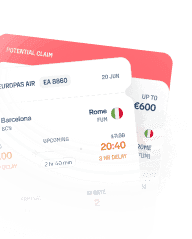
Depending on where you flew and what happened, you could be eligible for up to €600 airline compensation — and in some cases, you may also be able to claim back additional costs. Run a free check in the AirHelp app and find out in minutes what your flight may be worth.
How airlines can do better
The biggest improvements are also the simplest: communicate early, clearly, and proactively — and take responsibility for care.
When a disruption happens, passengers need the basics fast: what's happening, what their options are, what support the airline will provide (like food, accommodation if necessary, or rebooking), and whether compensation might apply. That responsibility doesn't disappear just because a trip involves a missed connection or a self-booked connecting flight — though the rules do shift, which is worth knowing before you book.
Our survey shows why this matters: 68% of passengers reported stress or frustration, and 40% said they weren't satisfied with the care they received from the airline during the disruption. Better information, delivered at the right time, won't fix the disruption itself, but it can massively reduce the uncertainty that makes the experience feel so unfair.
And for passengers, the takeaway is simple: you're not on your own. You may have rights to care, reimbursement of certain expenses, and in some cases compensation — but you often only get it if you ask. The easiest way to ask is to let the AirHelp app ask for you: track every flight before you fly, get flagged the moment a disruption might owe you money, and let AirHelp handle the claim from your phone — over 1 million travelers already have.
Download the app and find out what your last disrupted flight could be worth, in under two minutes. We've already helped over 3 million people like you secure up to US$650 in compensation from airlines. Are you next?